
What Does ABA Therapy Actually Look Like? A Parent's Guide
May 9, 2025 • WellCare & Nurture Team
The ABA You've Heard About Isn't the ABA We Practice
If you've researched ABA therapy, you've probably found a mix of strong opinions. Some of the criticism is based on outdated practices from decades ago — practices that many modern behavior analysts, including our team, firmly reject.
At WellCare & Nurture, our ABA services are built on what the Behavior Analyst Certification Board (BACB) describes as best practice: evidence-based, individualized, and grounded in the dignity and wellbeing of every child.
What a Typical Session Looks Like
Forget images of children sitting at a table drilling flashcards. Here's what you'd actually see in one of our ABA sessions:
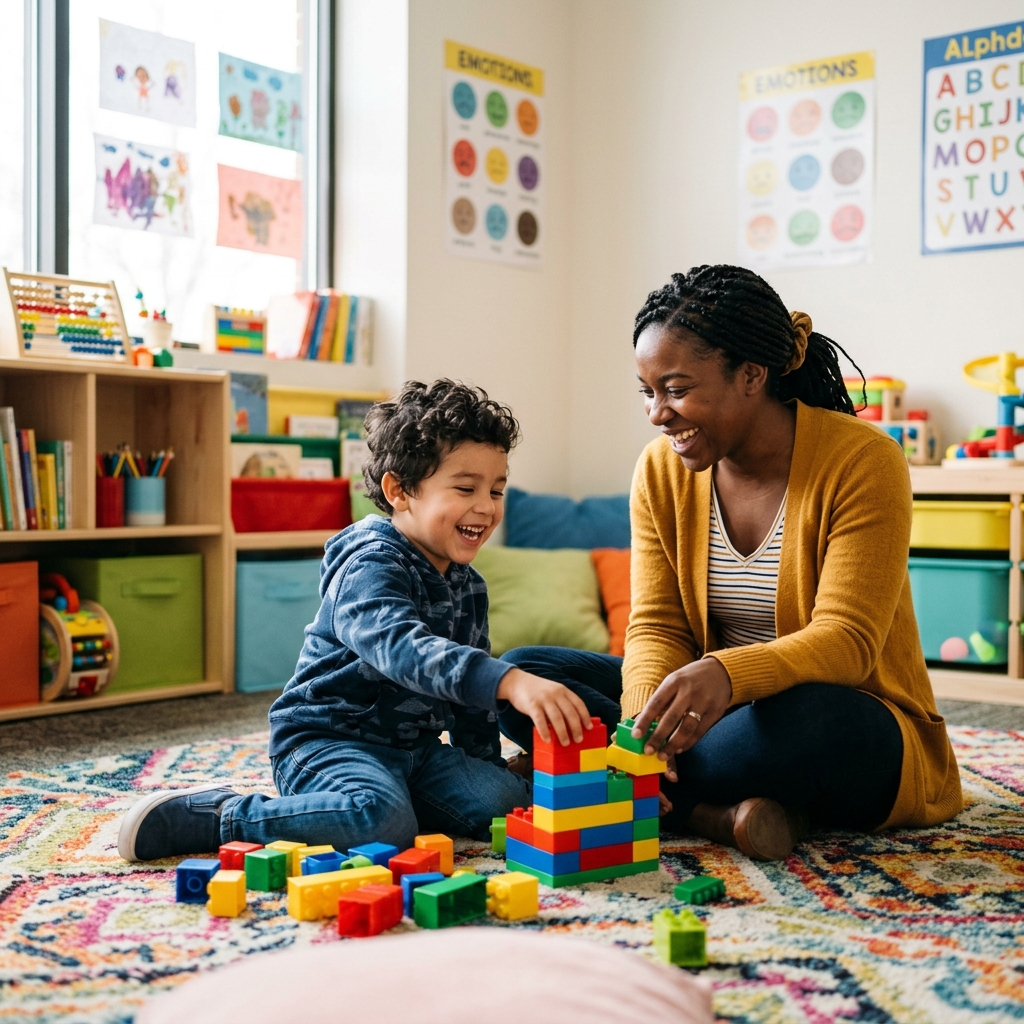
A Play-Based Environment
Our therapists (called Registered Behavior Technicians, or RBTs) spend time building a genuine relationship with your child. Sessions often look like play — because that's where the best learning happens.
- Building with blocks while practicing requesting ("I want the blue one!")
- Playing a board game while working on turn-taking and frustration tolerance
- Making a snack together while practicing sequencing and following directions
- Going to the park while working on peer interaction and safety skills
Child-Led Choices
Your child gets choices throughout their session. What to play with, where to sit, when to take a break. This isn't permissiveness — it's autonomy. Research shows children learn more when they feel in control.
Positive Reinforcement (Not Bribery)
We use what motivates your child to make learning rewarding. If they love dinosaurs, dinosaurs become part of the teaching. If they earn access to a favorite activity for completing a hard task, they learn that effort leads to good things.
What we don't do:
- We don't use punishment or aversives
- We don't withhold comfort or affection
- We don't force compliance
- We don't try to make autistic children appear "less autistic"
Our Trauma-Assumed Approach
Every child who walks through our doors may have experienced frustration, sensory overload, social exclusion, or anxiety related to their diagnosis. We take that seriously.
Our trauma-assumed ABA means:
- Safety first — we create calm, predictable environments and respect when a child says "no" or needs space
- Relationship before goals — we don't start teaching until trust is established
- Understanding the "why" — when a child engages in challenging behavior, we ask what they're communicating, not just how to stop it
- Empowerment — we teach children to advocate for themselves, set boundaries, and express their needs
What We Work On
Every child's program is unique, but common goals include:
- Communication — using words, signs, pictures, or AAC devices to express needs and ideas
- Social skills — making friends, understanding social cues, having conversations
- Daily living — dressing, eating, hygiene, and self-care routines
- Emotional regulation — recognizing feelings, calming strategies, coping with change
- School readiness — sitting in groups, following instructions, participating in classroom activities
- Safety — understanding dangers, staying safe in the community
The Team Behind Your Child
Your child's ABA team includes:
- BCBA (Board Certified Behavior Analyst) — designs the program, sets goals, analyzes data, and supervises the team
- RBT (Registered Behavior Technician) — works directly with your child in daily sessions
- You — the most important member. We train parents on strategies so learning continues at home
Common Questions
"Will ABA change my child's personality?"
Absolutely not. Our goal is not to change who your child is — it's to give them tools to navigate the world more comfortably. We celebrate neurodiversity and focus on building skills, not eliminating identity.
"How many hours does my child need?"
This varies widely. Some children do well with 10–15 hours per week; others benefit from more intensive programs. Your BCBA will recommend a plan based on your child's evaluation, and we always adjust based on progress and family needs.
"How long does ABA take?"
There's no one-size-fits-all answer. Some families are with us for a few months targeting specific skills; others stay for a few years during critical developmental windows. The goal is always to build independence, not create dependency on therapy.
See It for Yourself
The best way to understand our ABA program is to visit. We welcome families to tour our clinic, meet our team, and see sessions in action. No pressure — just a chance to see if it feels like the right fit for your family.
Learn about our ABA therapy program or schedule a free consultation or try our Little Leaps Milestone Checker to explore your child's developmental strengths.
This article reflects current ethical standards from the Behavior Analyst Certification Board (BACB). For more information, visit bacb.com.
Is your child showing signs of needing support?
If the topics in this post sound like your child, our team of pediatric specialists is here to help. We provide personalized ABA, Occupational, Physical, and Speech Therapy in Colorado Springs.
Schedule a Free Screening