
Positive Reinforcement: The Science Behind How Children Learn Best
September 16, 2025 • WellCare & Nurture Team
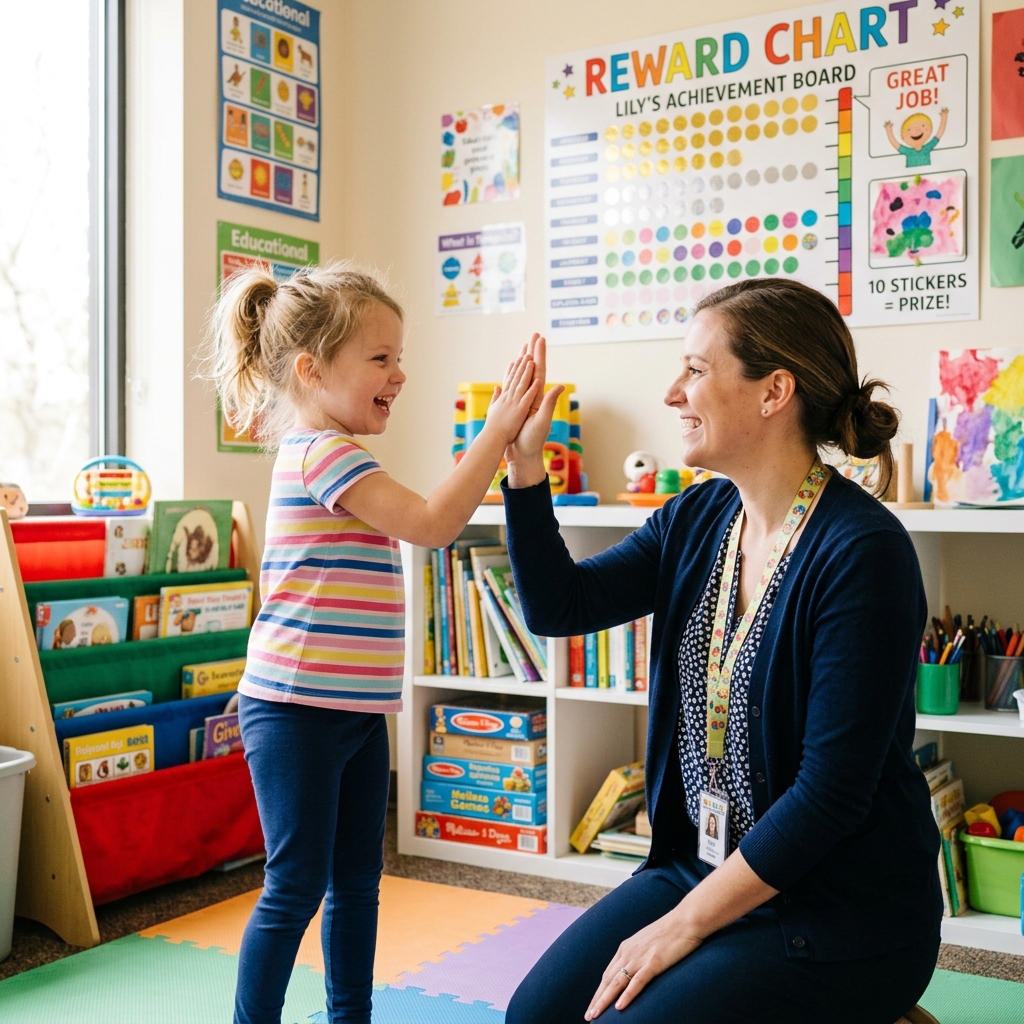
What Is Positive Reinforcement?
At its simplest, positive reinforcement means that when a behavior is followed by something the child enjoys, that behavior is more likely to happen again. It's not a parenting trick — it's how all brains learn.
The Behavior Analyst Certification Board (BACB) recognizes positive reinforcement as the most ethical and effective tool in applied behavior analysis. It works with the brain's natural learning systems, not against them.
Positive Reinforcement vs. Bribery — What's the Difference?
This is the most common misconception about positive reinforcement, so let's clear it up:
| Bribery | Positive Reinforcement | |
|---|---|---|
| When? | Given DURING unwanted behavior to stop it | Given AFTER desired behavior to strengthen it |
| Example | "Stop screaming and I'll give you a cookie" | "You used your words to tell me — here's a cookie!" |
| Message | "Act badly and you'll get what you want" | "Your good choice leads to good things" |
| Result | More unwanted behavior | More desired behavior |
The timing and intention make all the difference. Reinforcement is proactive and planned; bribery is reactive and desperate (we've all been there — no judgment!).
Types of Reinforcement
Not all reinforcement is food or toys. In fact, the most powerful reinforcers are often social:
Social Reinforcement
- Specific praise: "You put your shoes on all by yourself! That was so independent!"
- High fives, hugs, thumbs up
- Attention and quality time
Activity Reinforcement
- Earning extra play time
- Choosing the next activity
- Getting to help with a grown-up task (yes, kids find this reinforcing!)
Tangible Reinforcement
- Stickers, tokens, or small treats
- Access to a preferred toy
- Screen time (used strategically)
Natural Reinforcement
- Asking for a drink → getting a drink (the natural consequence IS the reinforcement)
- Putting on shoes → getting to go outside
- Saying "help" → getting help
Natural reinforcement is ideal because it teaches children that communication and effort lead to real-world results.
How to Use Positive Reinforcement Effectively
1. Be Immediate
Reinforcement works best when it happens within seconds of the desired behavior. For young children especially, delayed rewards lose their power. If you're reinforcing a toddler's word attempt, celebrate RIGHT THEN.
2. Be Specific
Instead of: "Good job!" Try: "I love how you used your words to ask for more milk!"
Specific praise tells the child exactly what they did right, making it easier to repeat.
3. Be Consistent
Especially when teaching a new skill, reinforce it every time it happens. Once the skill is established, you can gradually reduce reinforcement (this is called "thinning the schedule" in ABA).
4. Match the Reinforcement to the Child
What's reinforcing for one child may mean nothing to another. Our ABA team conducts a preference assessment — a fun process of discovering what your child loves most — to ensure we're using motivators that actually work.
5. Know When to Fade
The goal is always for the behavior to become self-reinforcing. A child who learns to brush their teeth for a sticker eventually does it because it feels good, it's routine, and they're proud of themselves. We systematically fade external reinforcement as internal motivation grows.
Positive Reinforcement at Home: Practical Examples
Morning Routine
Instead of nagging, try a visual checklist. Each completed step gets a checkmark (or sticker for younger kids). When the whole routine is done, something fun happens: "You got ready all by yourself! We have 10 extra minutes — what should we do?"
Sibling Conflicts
Catch them being kind: "Wow, you shared your truck without anyone asking! That was so generous. Come pick a book for bedtime tonight."
Challenging Behaviors
When a child who usually melts down during transitions instead goes calmly: "You came to the table the first time I asked. That was amazing. Here's a high five!"
Homework/Therapy Practice
Break tasks into small steps and reinforce along the way, not just at the end. "You finished three problems! Take a stretch break."
What About the Behaviors We DON'T Want?
Positive reinforcement isn't about ignoring problematic behavior. It's about:
- Understanding the function — why is this behavior happening? What is the child communicating?
- Teaching a replacement — what SHOULD they do instead?
- Reinforcing the replacement — making the new behavior more rewarding than the old one
This is the foundation of modern, ethical ABA — and it's far more effective than punishment. Children who feel understood and supported don't need to escalate to be heard.
Why This Matters
Every time you notice something your child does well and acknowledge it, you're wiring their brain to do it again. You're teaching them that effort matters, that their choices have positive consequences, and that they're capable.
That's not bribery. That's building confidence.
If you'd like to learn more about how positive reinforcement works in ABA therapy, or if you're struggling with challenging behaviors at home, reach out to us. We'd love to help.
This article reflects current ethical guidelines from the Behavior Analyst Certification Board (BACB). For more resources, visit bacb.com.
Is your child showing signs of needing support?
If the topics in this post sound like your child, our team of pediatric specialists is here to help. We provide personalized ABA, Occupational, Physical, and Speech Therapy in Colorado Springs.
Schedule a Free Screening