How Play Builds Language: The Science of Speech Through Fun
August 25, 2025 • WellCare & Nurture Team
"You Just Played with My Kid?"
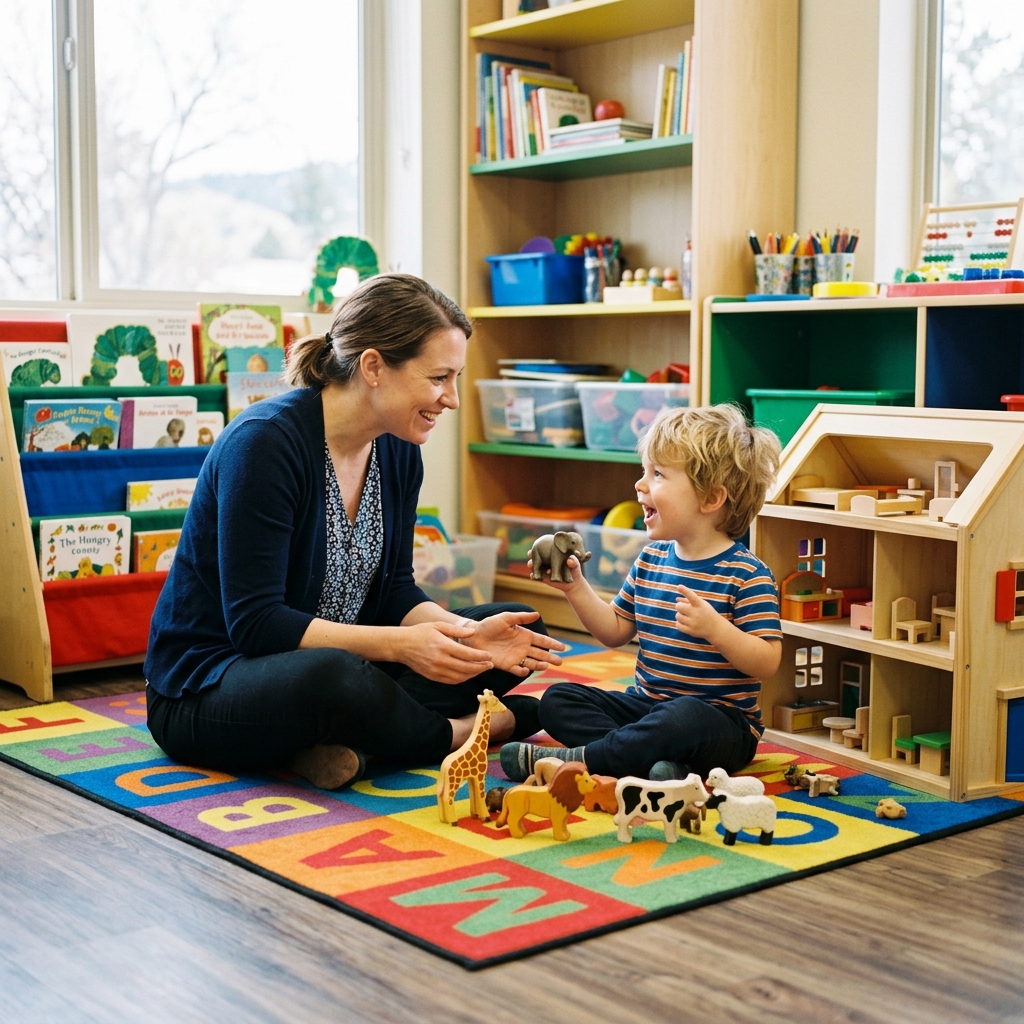
If you've ever watched a speech therapy session and thought, "That just looked like playing," you're not wrong — and that's exactly the point.
Play IS the work of childhood. It's how children make sense of the world, practice new skills, and build the brain connections that support language. The American Speech-Language-Hearing Association (ASHA) recognizes play-based intervention as an evidence-based approach to speech and language therapy.
When a skilled therapist "plays" with your child, they're actually doing something very intentional — creating natural opportunities for communication within activities your child already loves.
The Science Behind Play-Based Learning
Research tells us that children learn language best when:
- They're emotionally engaged — positive emotions open the brain to learning
- The context is meaningful — language connected to real experiences sticks better than drills
- There's social interaction — language is fundamentally social; it grows in relationships
- They have some control — following a child's interests creates natural motivation to communicate
This is why sitting a toddler at a table and drilling flashcards rarely works as well as getting on the floor and following their lead. The brain doesn't learn language in isolation — it learns language in connection.
What Play-Based Speech Therapy Looks Like
For Toddlers (1–3 Years)
- Bubbles — the therapist blows a few bubbles, then pauses. The child has to communicate (any sound, sign, or word) to request more. "Mo!" → "More bubbles! Pop pop pop!"
- Cars and ramps — "Ready, set... GO!" The therapist models the word and waits. The child learns that their words make things happen.
- Pretend cooking — "Stir stir stir! What should we put in? An apple? Yum!" Every action has a word attached.
For Preschoolers (3–5 Years)
- Storytelling with toys — acting out stories builds narrative skills, sentence structure, and vocabulary
- Art projects — "I need the RED paint. Can you give me the RED one?" — targeting colors, requests, and following directions
- Board games — practicing turn-taking, commenting, answering questions, and social language
For School-Age Kids (5+)
- Building projects — following verbal directions to build something (targets listening comprehension)
- Making comic strips — creating stories with beginning, middle, and end
- Cooperative games — games that require communication to win
Play Strategies Parents Can Use Right Now
You don't need to be a therapist to use these techniques. Our SLPs teach families to use them every day:
1. Be a Sportscaster
Narrate what your child is doing: "You're stacking the blocks! One, two, three blocks tall!" This floods them with relevant vocabulary without any pressure to respond.
2. Use Sabotage (Playfully!)
Set up situations where your child NEEDS to communicate:
- Give them a closed container they can't open (they'll ask for help)
- "Forget" to give them a spoon with their yogurt
- Stop pushing the swing and wait for a request
3. Offer Choices
Instead of asking "What do you want?" (too open-ended for many kids), offer two options: "Do you want the car or the train?" They practice language AND get control.
4. Wait, Wait, Wait
After modeling a word or asking a question, wait at least 5–10 seconds. It feels like forever, but processing time is where language happens. Resist the urge to fill the silence.
5. Expand, Don't Correct
Child: "Doggy run!" Instead of: "No, say 'The dog is running.'" Try: "Yes! The doggy is running fast!"
Expansion models correct grammar while validating their communication. Correction shuts it down.
Why This Matters for Trauma-Assumed Care
Play-based therapy isn't just more effective — it's more compassionate. Children who have experienced stress, transitions, medical procedures, or difficult experiences need to feel safe before they can learn.
When therapy feels like play:
- The child feels in control
- There's no failure — every attempt is celebrated
- Trust is built through fun, not through compliance
- The child wants to come back
At WellCare & Nurture, we believe that if a child doesn't want to come to therapy, something needs to change — and it's not the child.
Try It Today
The best part about play-based language building? You can start right now, with whatever toy, book, or snack is in front of you. No special equipment needed. Just your presence, your patience, and your words.
If you'd like personalized strategies for your child, contact us for a free speech screening, or learn about our speech therapy services. Or check in on your child's development with our Little Leaps Milestone Checker.
This article reflects current guidelines from the American Speech-Language-Hearing Association (ASHA). For more resources, visit asha.org.
Is your child showing signs of needing support?
If the topics in this post sound like your child, our team of pediatric specialists is here to help. We provide personalized ABA, Occupational, Physical, and Speech Therapy in Colorado Springs.
Schedule a Free Screening