
Helping Your Child Make Friends: Social Skills at Every Age
August 21, 2026 • WellCare & Nurture Team
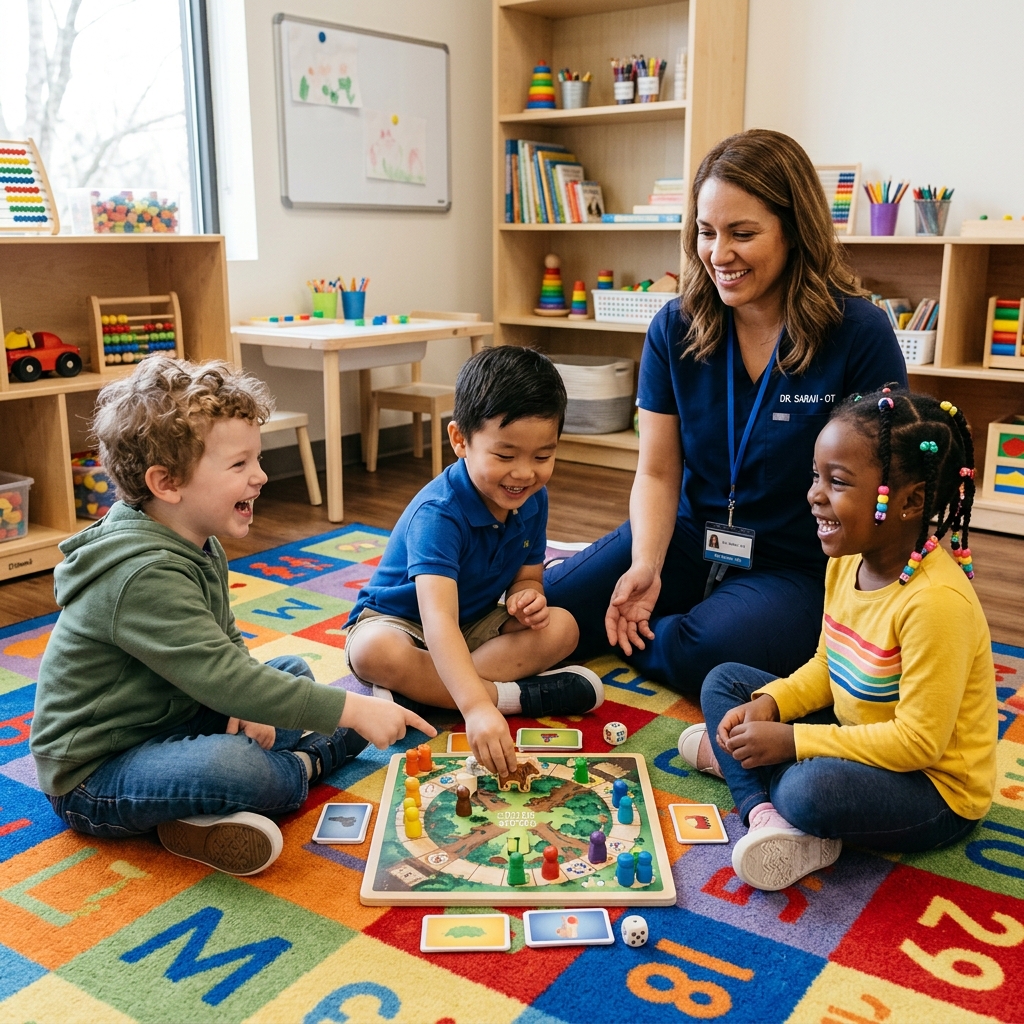
Why Friendships Matter More Than You Think
Friendships aren't just "nice to have" — they're a developmental necessity. Through peer relationships, children learn:
- Perspective-taking and empathy
- Conflict resolution and compromise
- Emotional regulation in social contexts
- Communication beyond the family unit
- Self-identity and belonging
For children with autism, ADHD, language delays, or social communication challenges, friendships don't come as naturally — but they're just as important.
Social Skills by Age: What to Expect
Toddlers (1–3 years): Parallel Play
- Playing near other children, not necessarily with them
- Beginning to notice and watch peers
- Simple interactions: offering a toy, imitating another child
- What to support: Sharing space, tolerating other children nearby, gentle hands
Preschoolers (3–5 years): Interactive Play
- Playing with others — shared activities and pretend play
- Taking turns (with support)
- Using words to communicate during play
- Beginning to show preferences for certain playmates
- What to support: Turn-taking, using words instead of grabbing, joining a group, handling disagreements
School-Age (5–8 years): Cooperative Play
- Rule-based games and organized activities
- Developing "best friends" and social groups
- Understanding social rules (waiting your turn to talk, reading body language)
- Managing exclusion and rejection
- What to support: Conversation skills, reading social cues, handling losing, being a good sport
Tweens (9–12 years): Complex Social Navigation
- Navigating group dynamics and social hierarchies
- Understanding sarcasm, humor, and hidden social rules
- Managing social media and digital communication
- Deepening friendships through shared interests and vulnerability
- What to support: Perspective-taking, conflict resolution, self-advocacy, digital citizenship
Red Flags: When Social Challenges Need Support
Every child has awkward social moments. But consider seeking support if your child:
- Consistently plays alone when other children are available
- Doesn't seem to notice or care about other children
- Wants friends but doesn't know how to make or keep them
- Is frequently rejected, bullied, or left out
- Gets overwhelmed in social settings and has meltdowns
- Misreads social cues consistently (stands too close, talks too loud, can't read facial expressions)
- Has difficulty with back-and-forth conversation
Practical Strategies for Parents
1. Create Opportunities
- Playdates: Short, structured, at your home (where your child feels comfortable)
- Shared activities: Enroll in a class based on your child's interest (not just team sports)
- Small groups: 1:1 playdates before group settings
- Predictable activities: Board games, building projects, cooking together
2. Coach Before, During, and After
- Before: "When Maya comes over, first you can show her your LEGOs, then ask her what she wants to play"
- During: Quietly guide from nearby — model phrases, redirect, celebrate
- After: Talk about what went well. "You shared your favorite toy — that was really kind!"
3. Use Social Stories
Social stories (short scripts about social situations) help children understand expectations:
- "When someone says hi, I can say hi back and smile"
- "If I want to play with someone, I can ask 'Can I play?'"
- "If my friend wants to play something different, I can try their idea"
4. Build on Interests
Children connect through shared interests. If your child loves dinosaurs, trains, or Minecraft — find peers who share those interests. Friendship grows fastest on common ground.
5. Teach the Hidden Rules
Many social rules are unspoken. Children with social communication challenges may need to be explicitly taught what neurotypical children absorb intuitively:
- How close to stand to someone
- When it's your turn to talk vs. listen
- How to tell if someone is interested or bored
- How to join a group that's already playing
- How to handle disagreements without leaving or hitting
How Therapy Supports Social Development
| Service | Social Skills Focus |
|---|---|
| Speech Therapy | Conversation skills, pragmatic language, understanding nonverbal cues |
| ABA Therapy | Social skills groups, behavioral strategies for peer interaction, friendship building |
| Occupational Therapy | Emotional regulation, sensory needs in social settings, cooperative play |
At WellCare & Nurture, many of our therapy sessions include peer interaction components — because social skills are best learned in real social situations.
The Most Important Thing You Can Do
Don't give up. Social skills are learnable. Progress may be slow, and there will be hard days. But with consistent support, coaching, and the right therapeutic guidance, your child can build meaningful friendships.
Every child deserves to feel like they belong.
- 🌱 Little Leaps Milestone Checker — includes social-emotional milestones
- 📋 Schedule a free screening
- 📞 (719) 598-5555
Social skills development guidance adapted from ASHA, the Autism Society, and evidence-based social communication research.
Is your child showing signs of needing support?
If the topics in this post sound like your child, our team of pediatric specialists is here to help. We provide personalized ABA, Occupational, Physical, and Speech Therapy in Colorado Springs.
Schedule a Free Screening