
Fine Motor Skills: 10 Fun Activities to Build Hand Strength
June 12, 2025 • WellCare & Nurture Team
Why Fine Motor Skills Matter More Than You Think
Fine motor skills — the small, precise movements of the hands and fingers — are the building blocks for so many everyday activities: writing, buttoning clothes, using utensils, opening containers, and tying shoes.
When fine motor skills are delayed, children can feel frustrated, avoid tasks, or appear "uncoordinated." But the truth is, these skills develop along a predictable path, and the right activities can make a huge difference.
The American Occupational Therapy Association (AOTA) emphasizes that fine motor development happens through play and real-life experience — not worksheets. Here are 10 activities our occupational therapists love.
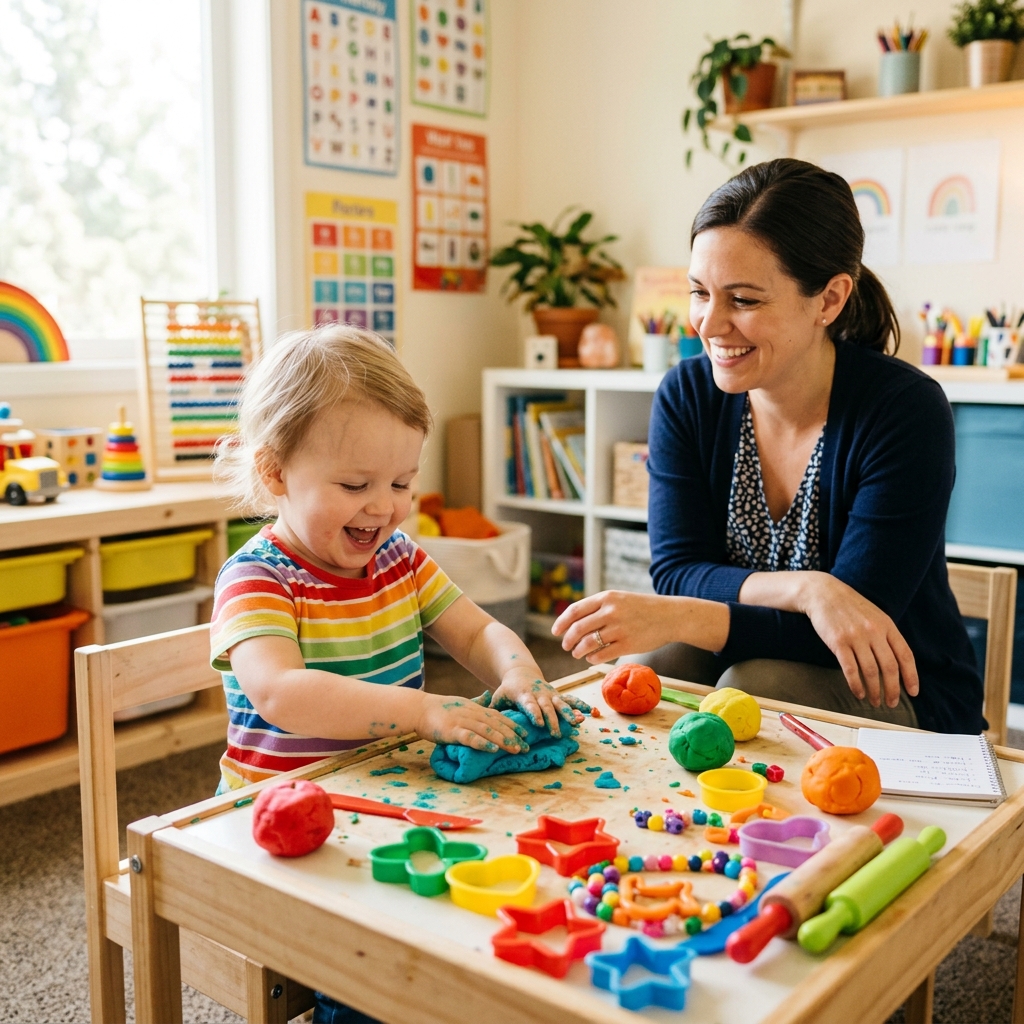
1. Playdough Power 🎨
Rolling, squishing, pinching, and pulling playdough is one of the best fine motor workouts. Try:
- Rolling small balls between thumb and fingertips
- Hiding small beads in the dough for them to find
- Cutting playdough with child-safe scissors or plastic knives
- Making letters, numbers, or shapes
2. Clothespin Games 🧷
Clothespins build the same pinch strength needed for pencil grip. Try:
- Clipping clothespins around a paper plate
- Picking up pom-poms with clothespins and sorting by color
- Clipping clothespins along the top of a box
3. Water Droppers 💧
Eye droppers and turkey basters build the muscles in the hand arch. Try:
- Dropping colored water onto coffee filters (beautiful tie-dye effect!)
- Filling ice cube trays one drop at a time
- Transferring water between small cups
4. Stringing Beads 📿
Threading beads onto string or pipe cleaners is classic OT gold. Start with large beads and thick string, then progress to smaller ones as they improve.
5. Tearing and Crumpling Paper 📰
Let them tear paper into small pieces (junk mail works great!). Then crumple the pieces into tiny balls using only their fingertips. This builds the intrinsic hand muscles that are hard to strengthen any other way.
6. Sticker Fun ⭐
Peeling stickers off a sheet and placing them precisely on a page works pincer grasp, finger isolation, and bilateral coordination. Use dot stickers for extra precision practice.
7. Cooking Together 🍪
Real-life fine motor at its best:
- Stirring batter
- Pouring ingredients
- Kneading dough
- Cracking eggs
- Spreading butter with a knife
Cooking builds fine motor skills AND daily living independence — two OT goals in one!
8. Lacing Cards 🪡
You can buy them or make your own — punch holes around a cardboard shape and lace yarn or string through. This builds bilateral coordination and teaches the up-down pattern needed for shoe tying.
9. Building with Small Pieces 🧱
LEGO, Magna-Tiles, Lincoln Logs, or Tinker Toys all require precise finger movements, spatial planning, and hand strength. Let them build freely — creativity counts.
10. Tong and Tweezer Games 🥢
Using tongs or tweezers to pick up small objects (cotton balls, pom-poms, cereal pieces) builds the same muscles as pencil control. Try sorting by color, size, or type for an extra learning layer.
When to Talk to an Occupational Therapist
Fine motor skills develop at different rates, and that's okay. But consider a conversation with an OT if your child:
- Has difficulty grasping small objects by 12 months
- Isn't using a pincer grasp (thumb and finger) by 12–15 months
- Still grasps crayons in a full fist after age 3
- Avoids coloring, drawing, or craft activities
- Struggles significantly with self-care tasks (buttons, zippers, utensils)
- Gets very frustrated with tasks requiring hand precision
A pediatric OT can evaluate your child's hand strength, coordination, and motor planning — and create a fun, play-based plan to build skills.
The Most Important Thing
Make it fun. If an activity feels like work or causes frustration, take a break. The goal is to build positive experiences around using their hands. Confidence comes before skill — and skill follows confidence.
Learn about our occupational therapy program or contact us for a free OT screening, or explore your child's development with our Little Leaps Milestone Checker.
This article reflects current guidelines from the American Occupational Therapy Association (AOTA). For more resources, visit aota.org.
Is your child showing signs of needing support?
If the topics in this post sound like your child, our team of pediatric specialists is here to help. We provide personalized ABA, Occupational, Physical, and Speech Therapy in Colorado Springs.
Schedule a Free Screening