
5 Simple Ways to Build Your Child's Vocabulary at Home
January 14, 2025 • WellCare & Nurture Team
Every Conversation Is a Learning Opportunity
One of the most common questions we hear from parents is, "How can I help my child talk more?" The good news is that you're probably already doing more than you realize — and with a few intentional tweaks, you can turn everyday moments into powerful language-building opportunities.
These strategies are supported by the American Speech-Language-Hearing Association (ASHA) and are the same techniques our speech-language pathologists use in therapy sessions.
1. Narrate Your Day
Talk through what you're doing, seeing, and feeling — out loud. This is called self-talk and parallel talk, and it's one of the most effective ways to expose your child to new words.
- "I'm pouring the milk into your cup. The milk is cold!"
- "You're putting the red block on top. You built a tall tower!"
You're not quizzing them — you're showing them how language works in real life. The key is to keep it natural, warm, and connected. Children learn best when they feel safe and engaged with their caregiver.
2. Follow Their Lead
Instead of directing play, let your child choose what to focus on. When they're interested in something, they're primed to learn. If they pick up a truck, talk about trucks. If they're watching a dog, narrate the dog.
Research from ASHA shows that child-led interactions lead to stronger vocabulary growth than adult-directed teaching. This approach also respects your child's autonomy — a core principle of trauma-assumed care.
3. Expand What They Say
When your child says a word or phrase, add to it:
- Child: "Ball!" → You: "Big ball! You're throwing the big ball!"
- Child: "Doggy go." → You: "The doggy is going fast! Zoom!"
This technique, called expansion, models the next step in language without correcting or pressuring them. It tells your child, "I heard you, and here's a little more."
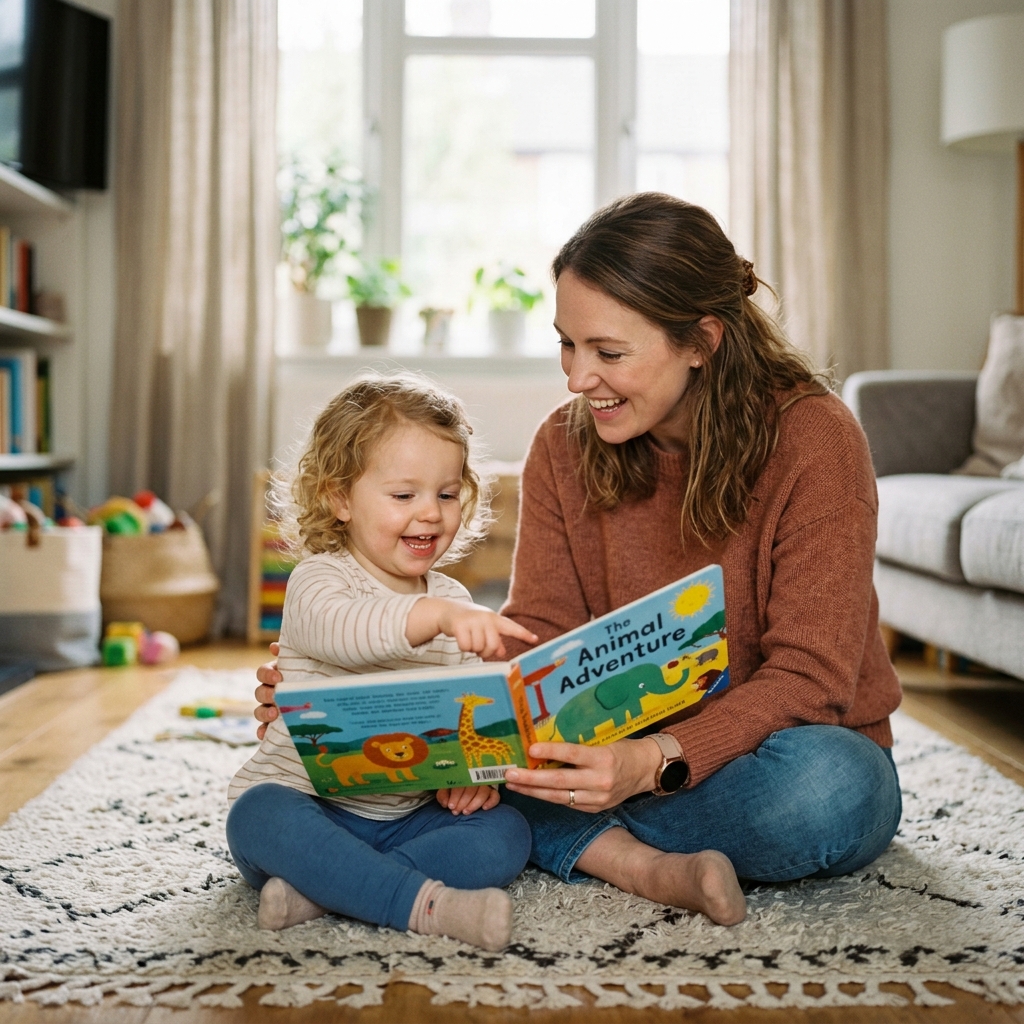
4. Read Together — Interactively
Reading isn't just about the words on the page. Dialogic reading — where you pause, ask questions, and let your child participate — has been shown to significantly boost vocabulary.
Try these during story time:
- Point to pictures and ask, "What's that?"
- Pause and let them fill in familiar words
- Ask open-ended questions: "What do you think will happen next?"
- Connect the story to their life: "He has a dog! Just like Bailey!"
Even with babies, narrating the pictures and pointing builds early word-object connections.
5. Embrace the Pause
This might be the hardest one — but it's incredibly powerful. After you say something or ask a question, wait 5–10 seconds before jumping in. Children need processing time, and that quiet space is where language growth happens.
Many parents feel uncomfortable with silence, but those pauses communicate something important: "I believe you have something to say, and I'll wait for you."
When to Seek Support
Every child develops at their own pace, and variation is completely normal. However, if you're noticing that your child isn't meeting expected milestones — or if your instincts are telling you something feels off — trust yourself. You know your child best.
Try our free Little Leaps Milestone Checker for a quick developmental snapshot, or contact us to schedule a free screening. There's never any pressure — just a friendly conversation about how your child is growing.
This article reflects current guidelines from the American Speech-Language-Hearing Association (ASHA). For more resources, visit asha.org.
Is your child showing signs of needing support?
If the topics in this post sound like your child, our team of pediatric specialists is here to help. We provide personalized ABA, Occupational, Physical, and Speech Therapy in Colorado Springs.
Schedule a Free Screening